GoHighLevel SaaS Pricing Strategy:
Feature-Based vs All-In-One
What is a GoHighLevel SaaS Packaging Strategy?
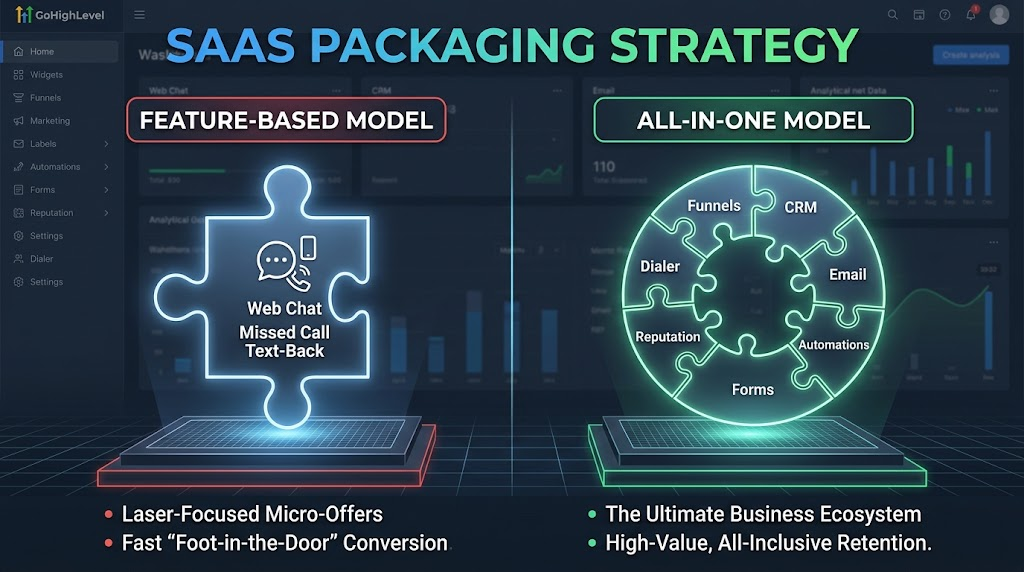
A GoHighLevel SaaS packaging strategy is the architectural framework an agency uses to structure its white-label software tiers. It dictates whether the platform is sold as an unbundled, feature-specific micro-offer to solve an immediate bottleneck, or as a comprehensive, all-in-one ecosystem designed to replace a business's entire tech stack.
Structuring your SaaS offers is less about the arbitrary numbers you choose and entirely about the psychology of how local business owners buy software.
Agencies often overwhelm prospects by pitching massive, complex bundles on day one. Pitching a full CRM migration to a busy contractor usually results in high friction, prolonged sales cycles, and rapid churn. To scale successfully, you must choose the right packaging model—Feature-Based or All-In-One—based on your target audience's technical maturity and immediate operational pain points.
The All-In-One Model: Selling the Ultimate Ecosystem
The All-In-One model is the traditional approach to selling GoHighLevel. In this structure, you unlock the entire CRM suite for your client in a single, comprehensive tier.
The Pros:
This model commands higher perceived value. It positions you as the ultimate technology partner by unifying the client's tech stack and eliminating the need for them to string together expensive, disconnected third-party apps.
The Cons:
It presents a massive barrier to entry. Selling an entire ecosystem requires extensive user education and risks completely overwhelming non-technical business owners, leading to a failure to launch.
The Feature-Based Model: The "Foot-in-the-Door" Approach
The Feature-Based model utilizes the GoHighLevel SaaS Configurator to restrict user permissions, unbundling the software into highly targeted micro-commitments. Instead of a full CRM, you sell a single solution, like a standalone web chat widget or a unified inbox.
The Pros:
This creates a frictionless sales cycle. It delivers instant gratification by laser-focusing on one specific problem (like capturing missed calls), requiring almost zero technical capability from the client to see immediate value.
The Cons:
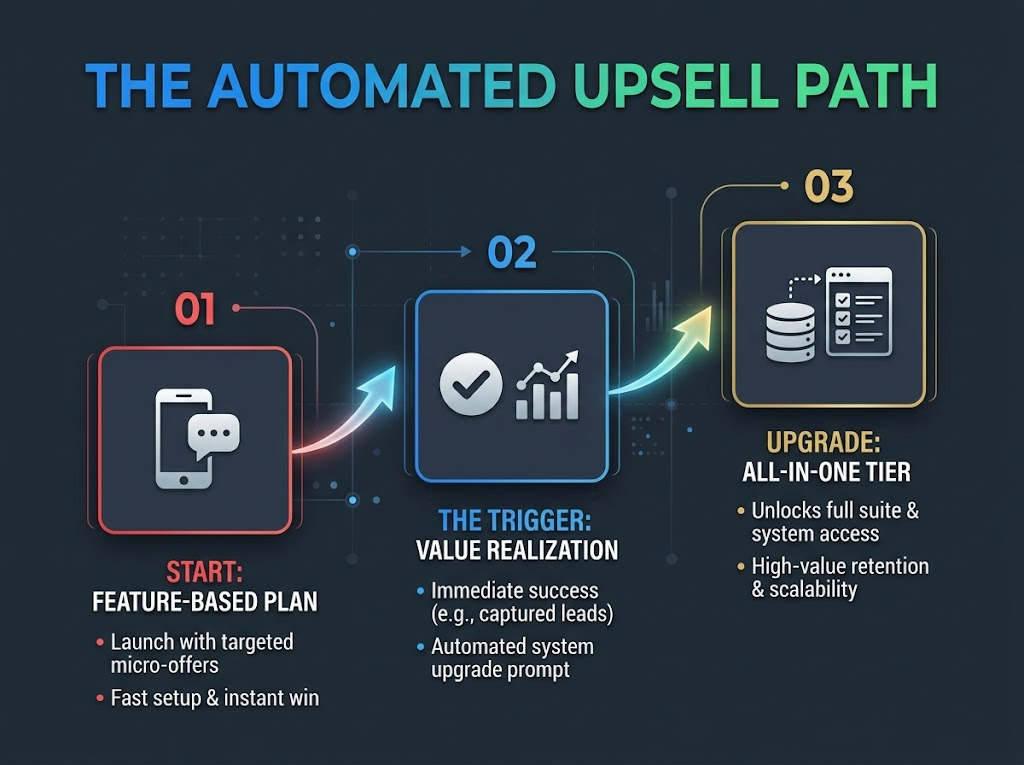
Because the initial commitment is smaller, this model absolutely requires a dialed-in, automated upsell system to eventually transition the client into your full software suite.
Feature-Based vs. All-In-One: Which Wins?
| Strategy Element | The Feature-Based Model | The All-In-One Model |
|---|---|---|
| Sales Cycle Length | Frictionless; instant self-serve checkout. | Prolonged; often requires live demos. |
| Onboarding Complexity | Near-zero; automated Snapshot deployment. | High; requires data migration and training. |
| Churn Risk | Low initially, provided the single tool works. | High early on due to "software overwhelm." |
| Ideal Prospect | Non-technical local service businesses. | Established businesses with marketing teams. |
How to Present Your Strategy Without Confusion
Regardless of the model you choose, forcing a prospect to read a text-heavy landing page filled with complex feature checklists will kill your conversions. Software is a visual medium and must be sold visually.
To drive high-intent traffic to your specific packages, hook top-of-funnel prospects by utilizing scroll-stopping video ads that highlight a specific tier's core value proposition. Once they hit your page, replace dense text with high-converting explainer videos that visually demonstrate exactly what the client gets when they subscribe.
If you are running the All-In-One model, user education is your biggest hurdle. You must deploy automated client onboarding sequences to ensure new users do not log in, get overwhelmed by the dashboard, and instantly cancel.
Stop confusing your prospects with complex tier structures. Clarify your offer and build a custom SaaS video strategy by booking a free call at GHL Explainer today.
Ready to clarify your pricing tiers and scale your SaaS?
Book a call and let’s design your complete SaaS video marketing and tier strategy.
Frequently Asked Questions
Can I restrict specific features within GoHighLevel?
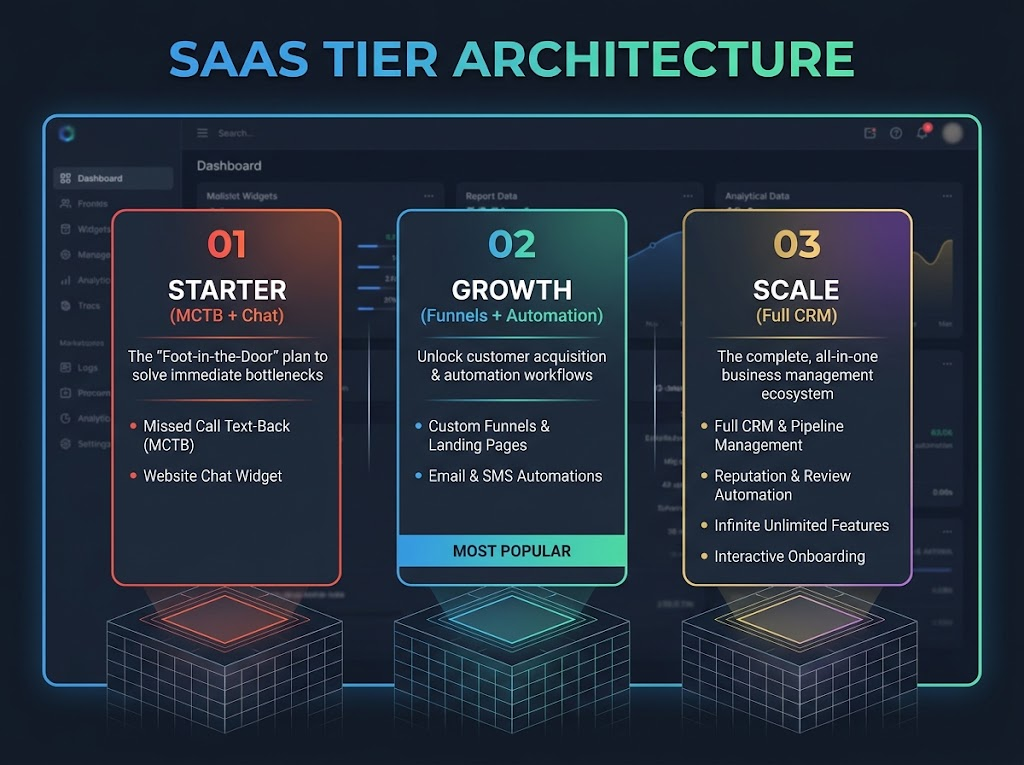
Yes. Using the GoHighLevel SaaS Configurator, you can drag and drop specific features in and out of your pricing tiers. This allows you to toggle off advanced features like pipelines or website builders, leaving only the specific tools you want to offer in a particular package.
Should I start with an All-In-One package or a Feature-Based one?
For most new agencies targeting local businesses, the Feature-Based model is the most effective starting point. It lowers the barrier to entry, requires less support bandwidth, and builds trust quickly by solving an immediate problem before pitching a full system migration.
How do I transition a client from a single feature to the full CRM?
The transition should happen automatically once the client achieves their first win. Set up automated workflows that trigger when a specific goal is met (such as capturing 10 leads via the web chat widget). This workflow can then deliver a video message pitching the value of upgrading to the full CRM to manage their new pipeline.
Skip the Loom. Talk to us.
Tell us what you're building. We'll tell you exactly which video it needs.
or write to hello@ghlexplainer.com